

🧩 A Story That Starts on the Factory Floor
Imagine walking into a Ford dealership in Texas, ready to buy America’s most iconic pickup — the F-150. But instead of rows of trucks, you find limited inventory, higher prices, and long waiting times.
This isn’t a demand problem.
It’s a metal problem — specifically, aluminum.
⚠️ What’s Really Happening? (The Core Crisis)
At the heart of this disruption is a sudden and severe aluminum shortage across North America — and it’s hitting automakers like Ford Motor Company the hardest.
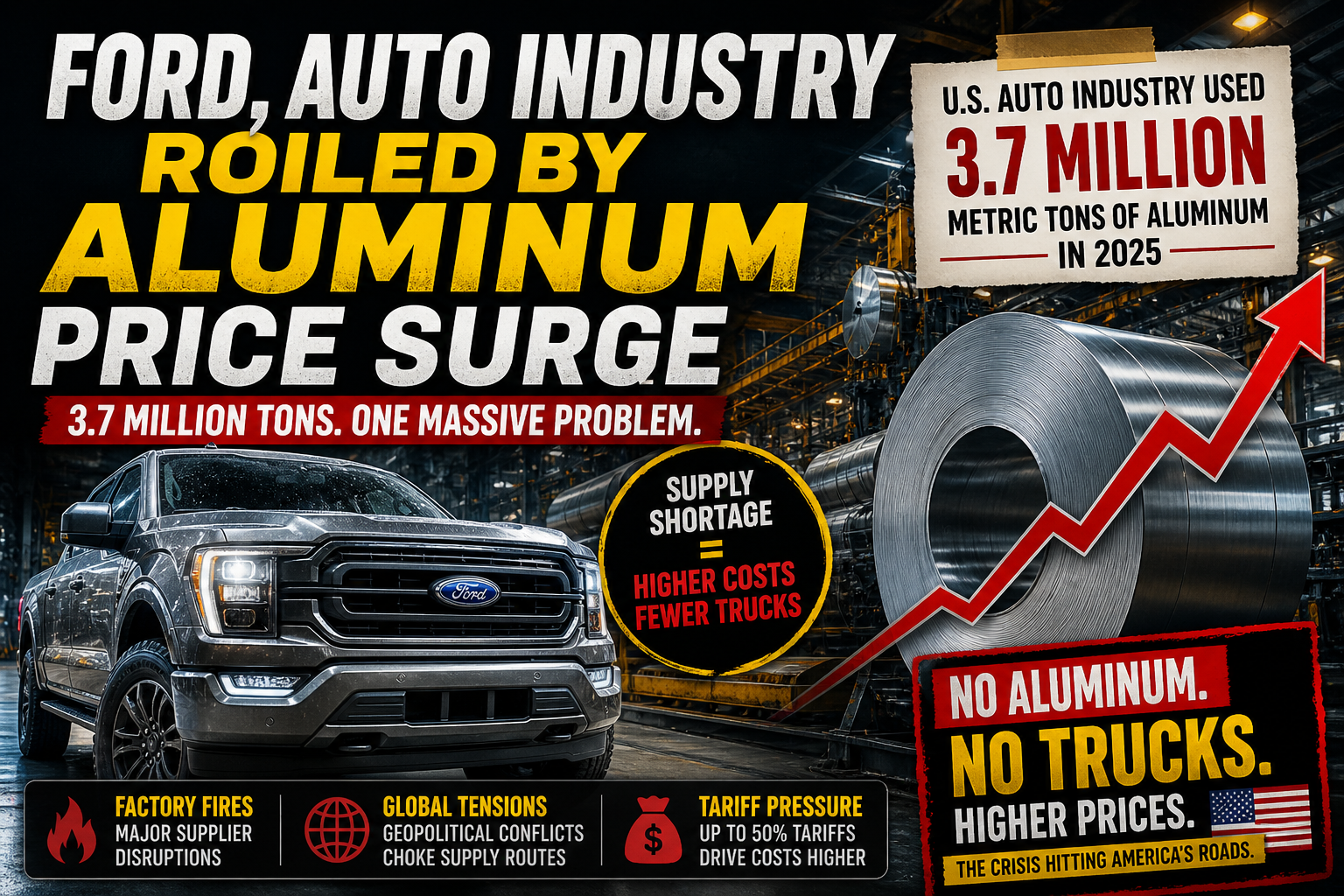
- The U.S. auto industry used 3.7 million metric tons of aluminum last year, up nearly 30% since 2020
- A large portion of U.S. aluminum (about 20%) comes from Persian Gulf countries
- But ongoing geopolitical tensions — especially conflict linked to Iran — have choked supply routes
👉 Result: Prices are surging, supply is shrinking, and production is slowing.
🔥 Why Ford Is at the Center of This Storm
Back in 2014, Ford made a bold move — shifting its best-selling truck, the F-150, to an aluminum body to reduce weight and improve fuel efficiency.
That decision paid off for years.
But now? It’s becoming a vulnerability.
- Aluminum prices have nearly doubled in some cases
- Ford dealerships are reporting falling inventory of F-150 trucks
- Production of F-Series trucks has already declined due to supply shortages
👉 In simple terms:
No aluminum = fewer trucks = higher prices
🏭 The Hidden Trigger: Factory Fires & Tariffs
This crisis didn’t come from one single event — it’s a perfect storm of multiple disruptions:
1. 🏭 Supplier Disaster
- A major aluminum supplier, Novelis, faced fires at its New York plant
- This plant supplied a huge portion of auto-grade aluminum
- Ford alone took a $2 billion hit from the disruption
2. 💰 Tariff Pressure
- The U.S. has imposed heavy tariffs (up to 50%) on imported aluminum
- Even when companies import metal to fill the gap, it becomes expensive
3. 🌍 Global Conflict
- Middle East tensions are disrupting shipping routes
- Aluminum prices are expected to rise 20%+ compared to 2025 levels
👉 Combined effect:
Supply chain + geopolitics + tariffs = industry-wide shock
📉 The Bigger Picture: It’s Not Just Ford
This isn’t just one company’s problem — it’s reshaping the entire U.S. auto industry.
- Automakers are facing rising production costs
- Vehicle prices — already high — could go even higher
- Industry analysts expect weaker sales in 2026 due to affordability issues
Even companies posting strong profits are warning:
👉 Material costs like aluminum are becoming the biggest threat to margins
⚡ What Happens Next?
🔮 Short Term
- Truck supply will remain tight
- Prices may continue to rise
- Automakers may cut production or delay models
🧠 Long Term
- Companies may rethink material strategy (steel vs aluminum)
- Supply chains could shift closer to home (U.S. manufacturing push)
- Innovation in lightweight alternatives may accelerate
🧠 Final Take (For US Audience)
The American auto industry isn’t just fighting EV competition anymore —
it’s battling something far more basic:
👉 Raw materials.
Aluminum — once a quiet hero behind fuel-efficient trucks — has now become a strategic bottleneck.
And until supply stabilizes, one thing is clear:
The price of building America’s favorite vehicles is only going up.