

For many Americans, buying an electric vehicle is no longer just about range, horsepower, or charging speed.
It’s about trust.
When you’re spending $50,000, $70,000, or even more on an EV, one question matters more than ever:
Will this vehicle actually be reliable five years from now?
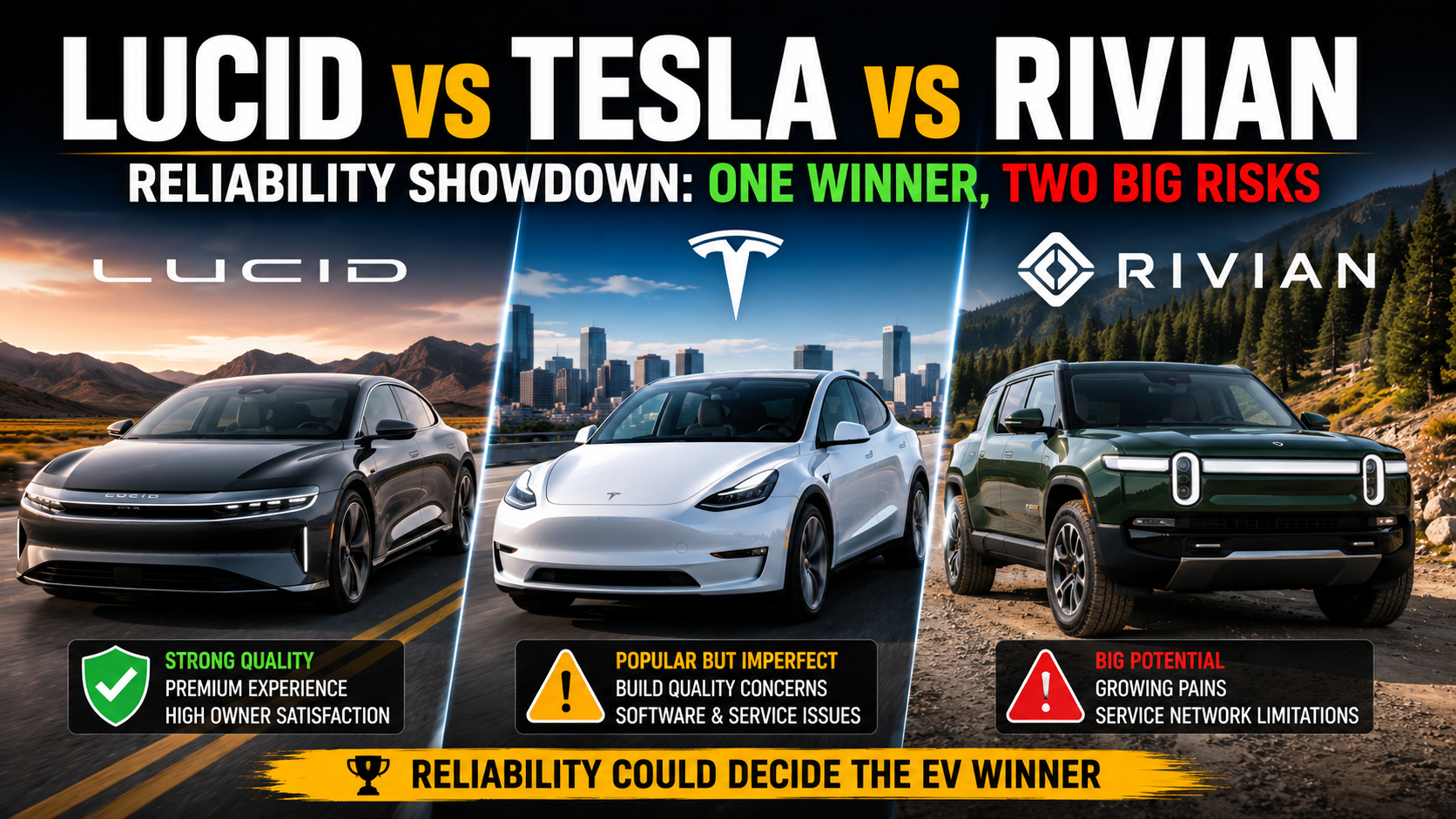
That’s exactly why a recent comparison between Lucid, Tesla, and Rivian has sparked so much discussion among EV buyers. While all three brands are shaping the future of transportation, reliability data suggests that one company may be pulling ahead while the others continue to battle growing concerns.
The EV Reliability Question Is Bigger Than Ever
The American EV market has changed dramatically over the past few years.
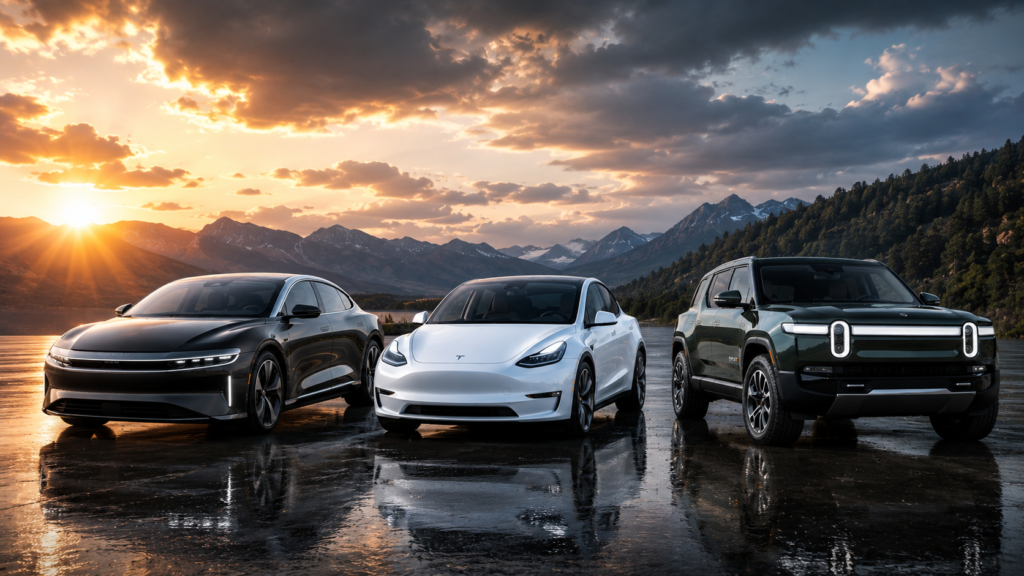
Tesla is no longer the only major player. Rivian has become a favorite among adventure-focused truck and SUV buyers. Lucid has positioned itself as a luxury technology leader with industry-leading range figures.
But rapid innovation often comes with growing pains.
Software glitches, manufacturing defects, charging issues, and service delays have become common topics across EV forums and owner communities. For many buyers, reliability is now one of the biggest factors influencing purchasing decisions.
Why Lucid Is Suddenly Getting Attention
Lucid may not sell vehicles in the same numbers as Tesla, but the company has earned praise for engineering quality and customer satisfaction.
The flagship Lucid Air continues to impress industry reviewers with its efficiency, premium interior, and exceptional driving range. Some versions of the Air can travel more than 500 miles on a single charge, making it one of the longest-range EVs ever produced.
More importantly, many owners report fewer major reliability complaints compared with other newer EV startups.
Lucid’s smaller production volume allows the company to focus heavily on quality control and customer experience. While no vehicle is perfect, Lucid appears to be avoiding some of the large-scale service issues that have affected competitors.
Tesla Remains the EV King—But Challenges Are Growing
There’s no denying Tesla’s impact on the automotive industry.
The company transformed EVs from niche products into mainstream vehicles. Models like the Tesla Model Y and Model 3 remain among the best-selling electric vehicles in America.
However, Tesla’s biggest challenge may be its own size.
With millions of vehicles on the road, even minor issues can quickly become major headlines.
Owners frequently discuss concerns involving:
- Build quality inconsistencies
- Paint defects
- Interior fit-and-finish problems
- Software bugs after updates
- Service center wait times
Tesla still leads in charging infrastructure thanks to its Supercharger network, but reliability conversations continue to generate debate among consumers.
For buyers focused purely on convenience and charging access, Tesla remains difficult to beat. For buyers prioritizing long-term dependability, the conversation becomes more complicated.
Rivian’s Biggest Opportunity Could Also Be Its Biggest Risk
Rivian has built one of the strongest brand identities in the EV industry.
The company’s R1T pickup and R1S SUV have earned praise for performance, off-road capability, and innovative design.
Many owners absolutely love their vehicles.
But Rivian faces challenges that are common among rapidly growing automakers.
As production scales, maintaining consistent quality becomes harder. Several recalls and service-related concerns have raised questions about long-term reliability.
The company’s biggest hurdle may not be the vehicles themselves—it may be the service network.
Unlike traditional automakers with thousands of dealerships, Rivian is still expanding its service infrastructure. For some owners, repair appointments can involve long travel distances or extended wait times.
What Reliability Really Means for EV Buyers
Many consumers focus only on mechanical reliability.
In electric vehicles, reliability has evolved.
Today’s EV owners also care about:
- Battery longevity
- Software stability
- Charging performance
- Service availability
- Over-the-air update quality
- Driver-assistance system performance
A vehicle can have a flawless motor and battery but still frustrate owners if software problems persist.
That’s why reliability rankings are becoming increasingly complex in the EV era.
The Real Winner Depends on What You Value
If your priority is luxury, engineering quality, and a premium ownership experience, Lucid is emerging as one of the strongest options in the market.
If you want access to the nation’s best charging network and proven EV technology, Tesla remains the benchmark despite ongoing concerns.
If you need a capable electric truck or adventure SUV unlike anything else available, Rivian continues to offer a unique experience that many owners wouldn’t trade for anything else.
Looking Ahead to 2027
The next two years could be critical for all three companies.
Lucid must prove it can scale production without sacrificing quality.
Tesla must continue improving consistency as competition intensifies.
Rivian must expand its service network while maintaining owner confidence.
One thing is certain: reliability is becoming the next major battlefield in America’s EV revolution.
And for many buyers, it may ultimately matter more than acceleration times or maximum range.
The EV company that earns consumer trust over the long term could end up winning far more than just sales—it could win the future of the industry itself.