

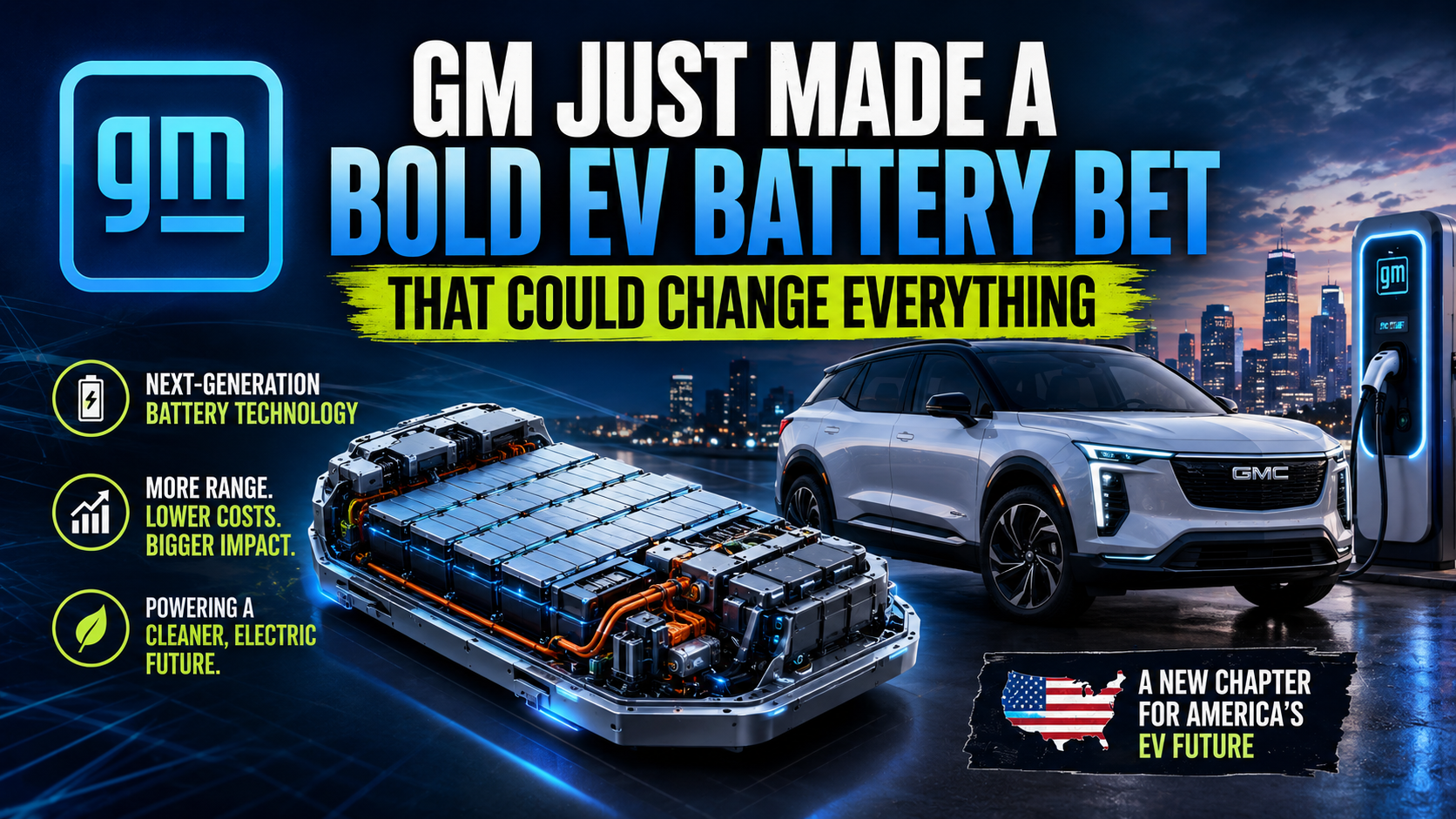
The electric vehicle race is entering a new chapter, and General Motors may have just made one of the biggest bets in the industry.
For years, the EV conversation has been dominated by familiar topics: range, charging speed, affordability, and battery technology. Automakers across the globe have invested billions of dollars trying to build better batteries that can travel farther, charge faster, and cost less.
Now, GM is signaling that it may take a different path than many of its competitors—and the move could reshape the future of electric vehicles in America.
Why Batteries Matter More Than Ever
Ask any EV buyer what concerns them most, and the answer is usually the same: battery performance.
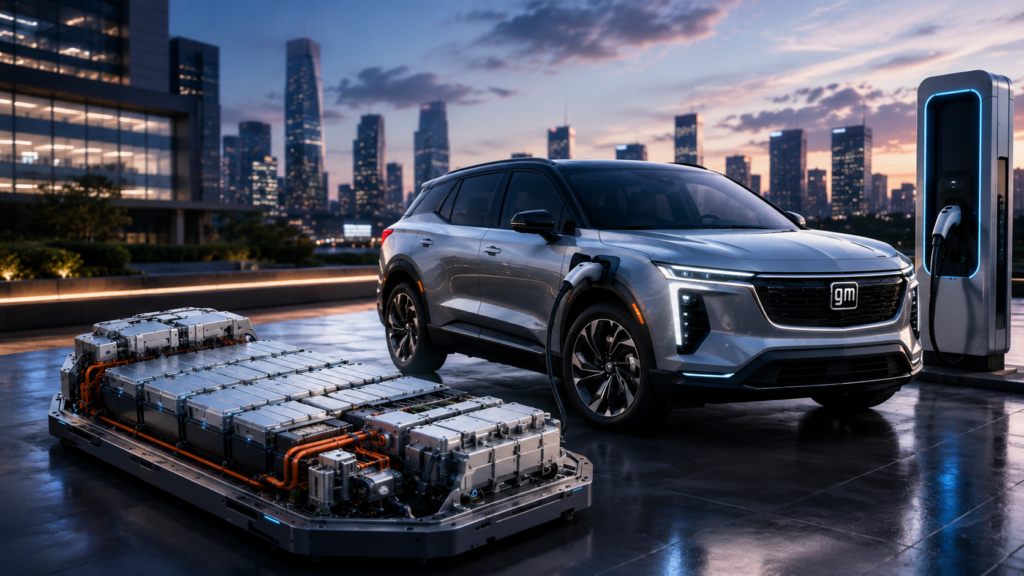
The battery is the heart of every electric vehicle. It determines how far you can drive, how quickly you can recharge, how much the vehicle costs, and even how long it will hold its value.
That’s why automakers are constantly searching for the next breakthrough.
For the past few years, many manufacturers have embraced Lithium Iron Phosphate (LFP) batteries because they’re cheaper and more durable than traditional battery chemistries.
Companies have promoted LFP as the key to making EVs more affordable for everyday Americans.
But GM appears to be thinking beyond today’s solutions.
GM’s Big Battery Gamble
Instead of fully committing to LFP technology, GM is putting significant focus on a newer approach known as Lithium Manganese Rich (LMR) batteries.
While the technology is still developing, supporters believe LMR batteries could offer an impressive combination of benefits:
- Lower production costs
- Higher energy density
- Reduced dependence on expensive materials
- Greater driving range
- Improved long-term scalability
If successful, LMR batteries could help solve one of the biggest challenges facing the EV industry today: delivering affordable electric vehicles without sacrificing performance.
And that’s a challenge every automaker is trying to crack.
Why This Matters for American Drivers
For many consumers, EV adoption still comes down to simple math.
A vehicle may be environmentally friendly, technologically advanced, and fun to drive—but if it costs significantly more than a gas-powered alternative, many buyers hesitate.
GM’s strategy is aimed directly at that problem.
The company believes future battery innovations can lower manufacturing costs while maintaining competitive range and performance.
If that happens, Americans could eventually see:
- More affordable electric SUVs
- Lower-cost electric trucks
- Improved battery durability
- Better driving range between charges
For buyers waiting on the sidelines, that could be a game changer.
The EV Market Is Getting More Competitive
GM isn’t making this move in a vacuum.
Competition in the EV sector has never been more intense.
Automakers are battling for market share while also dealing with economic uncertainty, changing consumer demand, and growing pressure to make EVs profitable.
Every major company is searching for an advantage.
Some focus on software.
Others focus on charging infrastructure.
GM is betting that battery innovation could be the deciding factor.
And history suggests that whoever wins the battery race often gains a major competitive edge.
The Risks Behind the Opportunity
Of course, bold bets don’t come without risks.
New battery technologies can take years to perfect.
Scaling production is expensive.
Unexpected engineering challenges can emerge at any stage of development.
Consumers have seen promising battery breakthroughs before that never reached mass production.
That’s why industry analysts are watching GM’s strategy closely.
The potential rewards are enormous, but the execution will determine whether this becomes a breakthrough or simply another experiment.
What It Could Mean for the Future of EVs
If GM succeeds, the impact could extend far beyond one company.
A successful next-generation battery platform could accelerate EV adoption across the United States by addressing concerns about cost and range at the same time.
That would benefit not only GM but the entire electric vehicle ecosystem.
More affordable batteries could help:
- Increase EV sales nationwide
- Reduce manufacturing costs
- Expand charging-network utilization
- Improve consumer confidence
- Speed up the transition to electric transportation
In other words, this isn’t just a GM story.
It’s a story about where the entire industry could be headed.
The Bottom Line
General Motors is making a bold wager on the future of battery technology.
While many competitors continue to focus heavily on existing battery solutions, GM is investing in a path that could potentially deliver better performance and lower costs in the years ahead.
The company is essentially betting that the next major EV breakthrough won’t come from building bigger batteries—it will come from building smarter ones.
Whether that gamble pays off remains to be seen.
But one thing is clear: if GM gets this right, the future of electric vehicles in America could look very different than it does today.
And that’s why the entire auto industry is paying attention.