

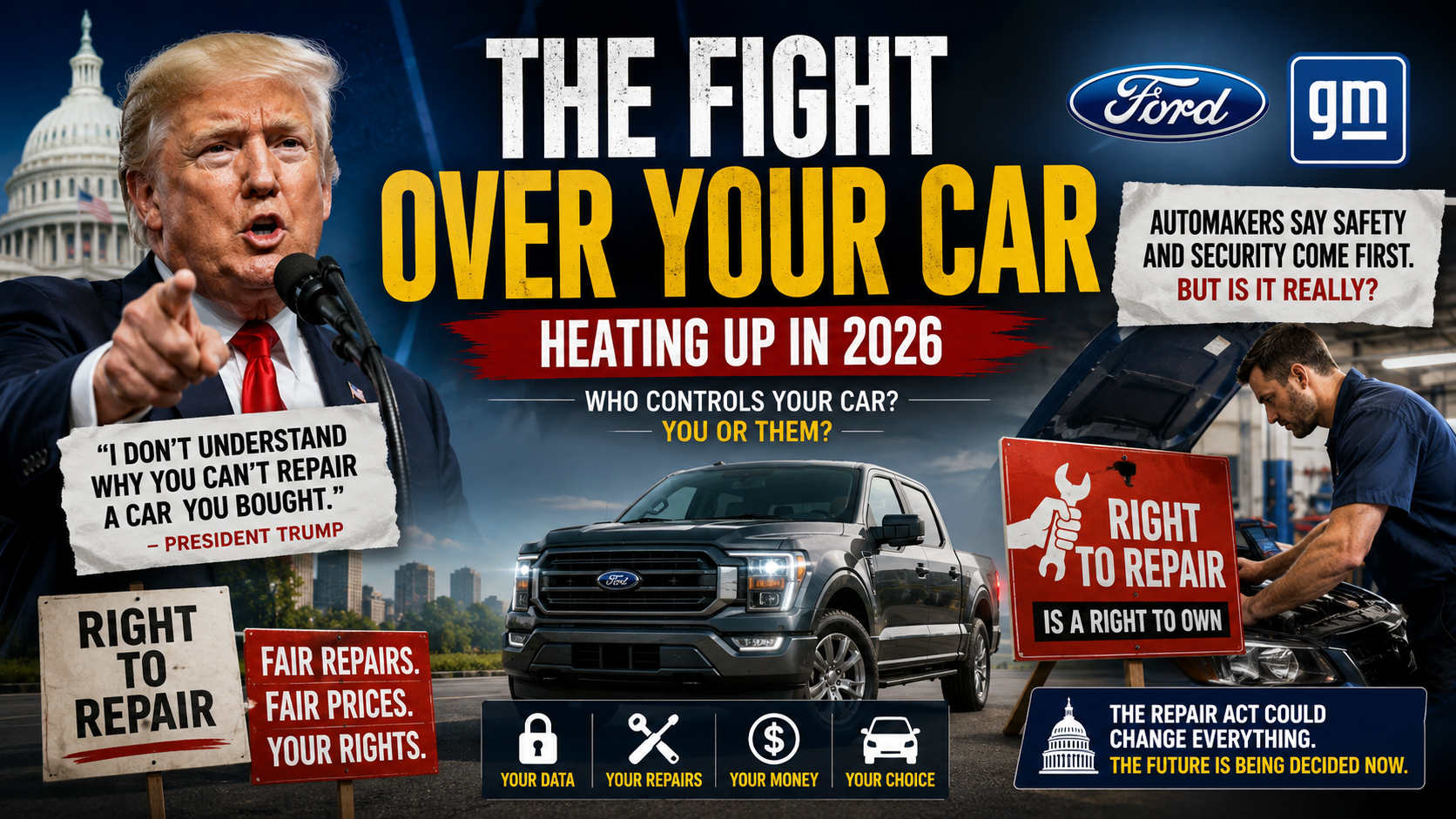
For decades, buying a car in America meant one simple thing: once you paid for it, it was yours.
You could drive it, modify it, repair it, and decide who worked on it when something broke. But in 2026, that idea is being challenged like never before.
A growing battle between automakers, lawmakers, repair shops, and consumers is raising a question that millions of Americans never thought they would have to ask:
Do you really own your car if you can’t repair it yourself?
And now, after comments from President Donald Trump and mounting pressure on major automakers like Ford and General Motors, the fight has exploded into one of the hottest debates in the U.S. auto industry.
How We Got Here
Modern vehicles aren’t just machines anymore.
Today’s cars contain dozens of computers, advanced sensors, wireless connections, cameras, software updates, and millions of lines of code. In many ways, they’re more like smartphones on wheels than traditional automobiles.
That technology has made vehicles safer, smarter, and more efficient.
But it has also created a new problem.
When something goes wrong, many independent repair shops don’t have access to the software tools, diagnostic information, or digital systems needed to complete certain repairs. In some cases, owners are forced to visit dealership service centers, where repair costs can be significantly higher.
For years, consumer groups and independent mechanics have argued that this system limits competition and drives up repair bills.
Automakers disagree.
They say unrestricted access to vehicle software could create cybersecurity risks, compromise safety systems, and expose customer data.
The result is a battle that has been building for years—and in 2026, it’s finally reaching a boiling point.
Why Trump’s Comments Changed Everything
The issue moved from industry circles into national headlines when President Donald Trump publicly questioned why car owners should face restrictions when repairing vehicles they purchased.
His comments instantly drew attention across the automotive world.
For many consumers, it felt like someone was finally asking the question they’ve been wondering about for years:
“If I paid $50,000 for a truck, why can’t I choose who repairs it?”
The remarks sparked intense discussion among automakers, lawmakers, repair businesses, and millions of vehicle owners across social media.
Suddenly, Right-to-Repair wasn’t just an industry issue anymore.
It became a national conversation.
Ford and GM Find Themselves in the Spotlight
As the debate intensified, Ford and General Motors became two of the most discussed companies in the conversation.
Neither company says it opposes repair rights.
In fact, both automakers argue that they support customer choice.
However, company leaders have repeatedly emphasized that modern vehicles contain complex systems that require secure access and specialized training.
According to automakers, unrestricted access could potentially affect:
- Vehicle cybersecurity
- Driver-assistance systems
- Emissions controls
- Safety features
- Customer privacy
Critics, however, believe those concerns are being used to maintain control over repair networks.
And that disagreement sits at the heart of the entire fight.
The REPAIR Act Could Change Everything
Perhaps the biggest reason this issue matters in 2026 is a proposed federal law known as the REPAIR Act.
Supporters say the legislation would require automakers to provide independent repair shops and vehicle owners with access to diagnostic information, repair tools, and service data needed to fix modern vehicles.
If passed, it could dramatically reshape the automotive service industry.
Consumers could gain more repair options.
Independent garages could compete more effectively with dealerships.
And repair costs for some owners could potentially decline.
For supporters, it’s about fairness.
For opponents, it’s about safety and security.
Either way, the outcome could affect nearly every driver in America.
Why Consumers Are Paying Attention
This debate is arriving at a time when Americans are already feeling pressure from rising vehicle costs.
New-car prices remain historically high.
Interest rates have made financing more expensive.
And many families are keeping vehicles longer than ever before.
As a result, repairs matter more than they used to.
When drivers plan to keep a vehicle for 10, 12, or even 15 years, affordable maintenance becomes a major financial issue.
That’s one reason public interest in Right-to-Repair has surged throughout 2026.
People aren’t just talking about policy.
They’re talking about their wallets.
The Industry’s Next Big Battle
Many experts believe the Right-to-Repair fight could become one of the most important automotive stories of the decade.
The outcome could determine:
- Who controls vehicle data
- Where owners can get repairs
- How much repairs cost
- How independent repair shops compete
- What true vehicle ownership means in the digital age
This isn’t just a battle about fixing cars.
It’s a battle about control.
As vehicles become increasingly connected and software-driven, the question grows more important every year:
When technology controls your vehicle, who really owns it?
Final Thoughts
The Right-to-Repair movement is no longer a niche issue discussed by mechanics and industry insiders.
It has become a national debate involving presidents, lawmakers, automakers, and millions of everyday drivers.
Whether you’re driving a Ford pickup, a Chevrolet SUV, or any other modern vehicle, the decisions made in Washington over the next few years could directly affect how you maintain and repair your car.
And for many Americans, the answer to a simple question may define the future of car ownership:
When you buy a vehicle, should you have the right to fix it wherever you choose?
In 2026, that question has never been more important.