

For decades, Toyota built its reputation on something simple: reliability.
Ask almost any American driver what comes to mind when they hear the Toyota name, and you’ll probably hear words like dependable, durable, and trustworthy. From the Camry to the Corolla, Toyota became one of America’s most respected automakers by doing the basics better than almost anyone else.
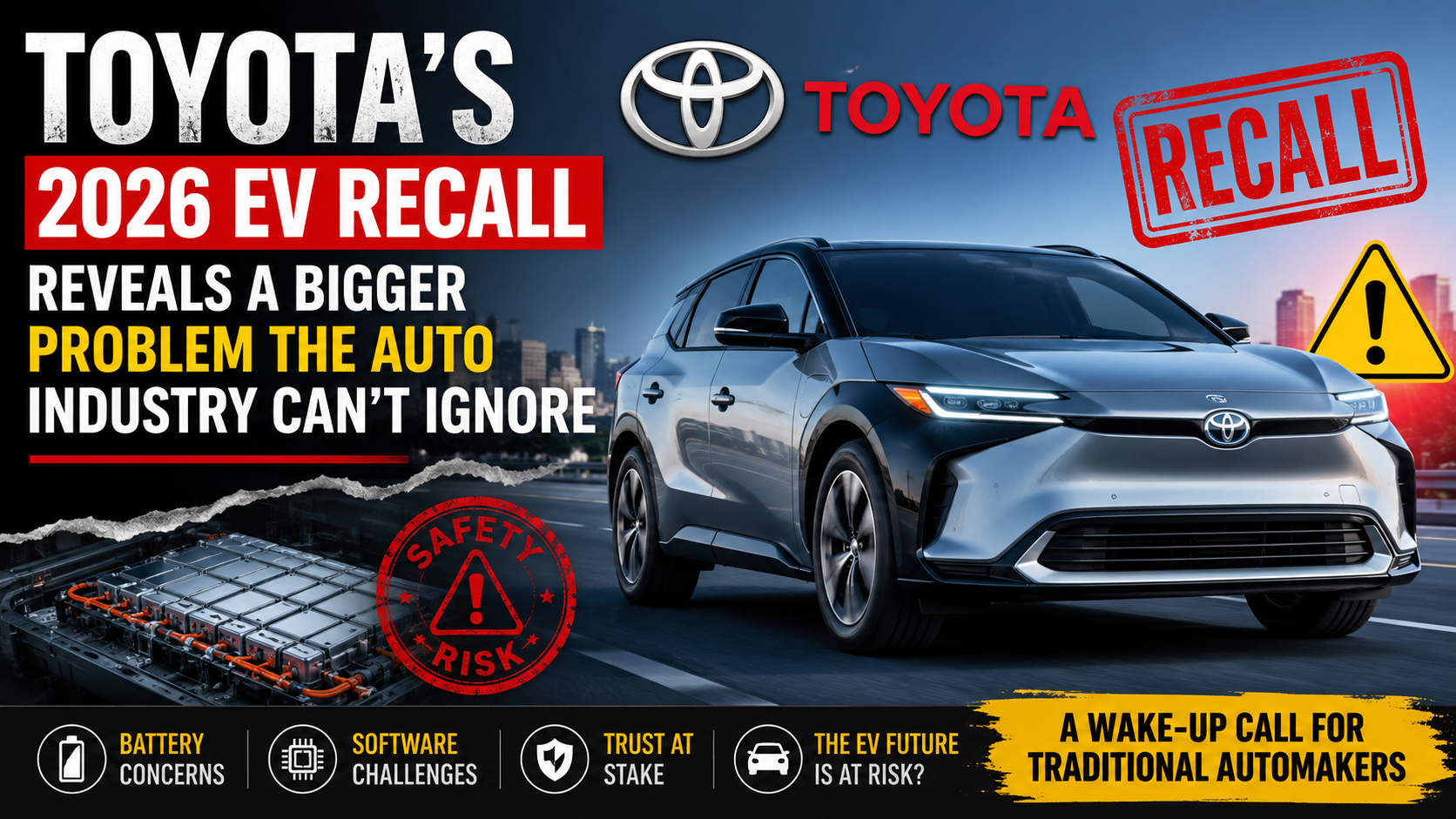
But in 2026, a new EV recall is forcing both consumers and industry experts to ask a difficult question:
Can a company built for the gasoline era seamlessly transition into the electric future?
A Recall That’s About More Than a Defect
At first glance, Toyota’s latest EV recall may look like a routine industry issue. Recalls happen every year, and even the biggest automakers aren’t immune.
Yet this recall has sparked a much larger conversation.
The problem isn’t just the affected vehicles. It’s what the situation reveals about the enormous challenge facing traditional automakers as they race to compete in an electric world dominated by software, batteries, and constant technological updates.
For companies like Toyota, building an EV isn’t simply about replacing an engine with a battery pack. It’s about reinventing decades of engineering practices, supply chains, manufacturing systems, and corporate culture.
And that’s easier said than done.
The Legacy Advantage Is Becoming a Legacy Burden
For years, Toyota’s manufacturing expertise was its greatest strength.
The company mastered internal combustion technology and built one of the most efficient production systems on the planet. That formula helped Toyota become one of the world’s largest automakers.
But electric vehicles operate under a completely different rulebook.
Today’s EVs depend heavily on:
- Advanced battery systems
- Complex software integration
- Over-the-air updates
- New electronic architectures
- Continuous digital monitoring
These aren’t areas where traditional automakers automatically hold an advantage.
In fact, some experts argue that the very systems that made legacy brands successful can sometimes slow their ability to adapt.
Why Consumers Are Paying Attention
American buyers are becoming more selective about EV purchases.
Many shoppers are already concerned about battery longevity, charging infrastructure, repair costs, and resale value. When a recall affects an electric vehicle, those concerns naturally grow.
For Toyota, maintaining consumer confidence is critical.
The company has spent decades earning trust, and while recalls rarely destroy a brand’s reputation overnight, they can influence how buyers view a company’s readiness for the EV era.
That’s especially important as competition intensifies.
Automakers from the United States, Europe, South Korea, and China are all investing billions into electric vehicle development. Every recall, software issue, or battery-related problem becomes headline news.
The Bigger Industry Challenge
Toyota isn’t alone.
Nearly every major legacy automaker is facing similar growing pains.
Ford has dealt with EV software issues.
General Motors has battled battery-related setbacks.
Volkswagen has faced delays tied to software development.
The reality is that the transition to electric vehicles is proving far more complicated than many executives predicted just a few years ago.
Building great gasoline vehicles doesn’t automatically guarantee success in the EV market.
What Happens Next?
Toyota remains one of the strongest automotive brands in the world, and few analysts believe a single recall will change that.
However, this latest incident serves as another reminder that the EV revolution isn’t just transforming vehicles—it’s transforming the companies that build them.
The automakers that thrive over the next decade won’t necessarily be the ones with the longest history.
They’ll be the ones that can adapt the fastest.
And that’s why Toyota’s latest EV recall matters.
Because the story isn’t really about one recall.
It’s about whether legacy automotive giants can successfully reinvent themselves for the next generation of transportation.
As America moves deeper into the electric age, that question may become one of the most important stories in the entire auto industry.