

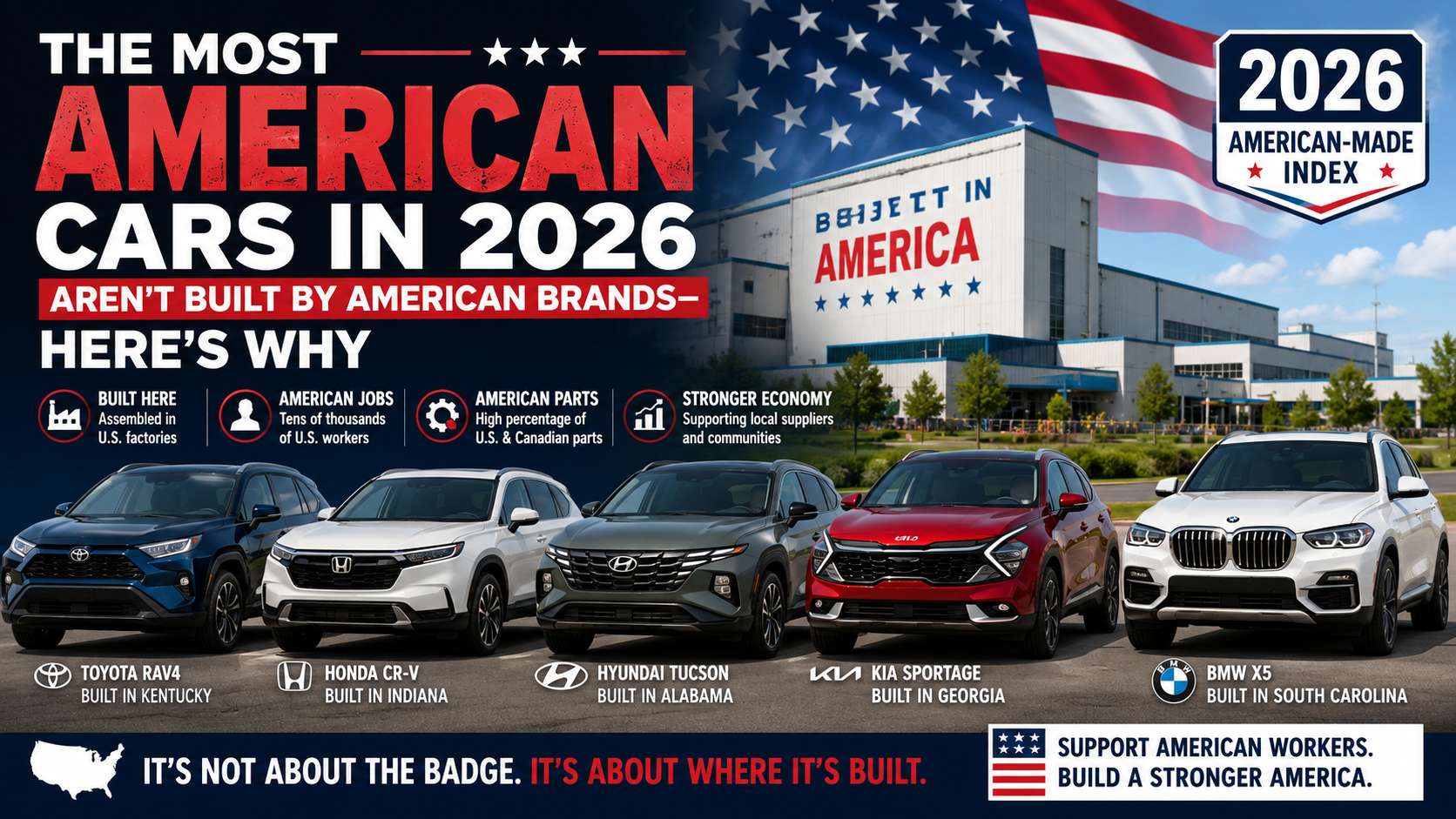
You Might Be Driving an “American” Car Without Realizing It
Imagine walking into a dealership convinced you’re about to buy an American-built vehicle. You skip the imports and head straight toward the domestic brands, believing that’s the best way to support American jobs.
Then you discover something unexpected.
One of the most American-made vehicles on the lot doesn’t wear a Detroit badge at all.
Instead, it comes from a company headquartered in Japan or South Korea.
That’s exactly what the latest 2026 American-Made Index has revealed, and it’s challenging decades of assumptions about what makes a car truly “American.”
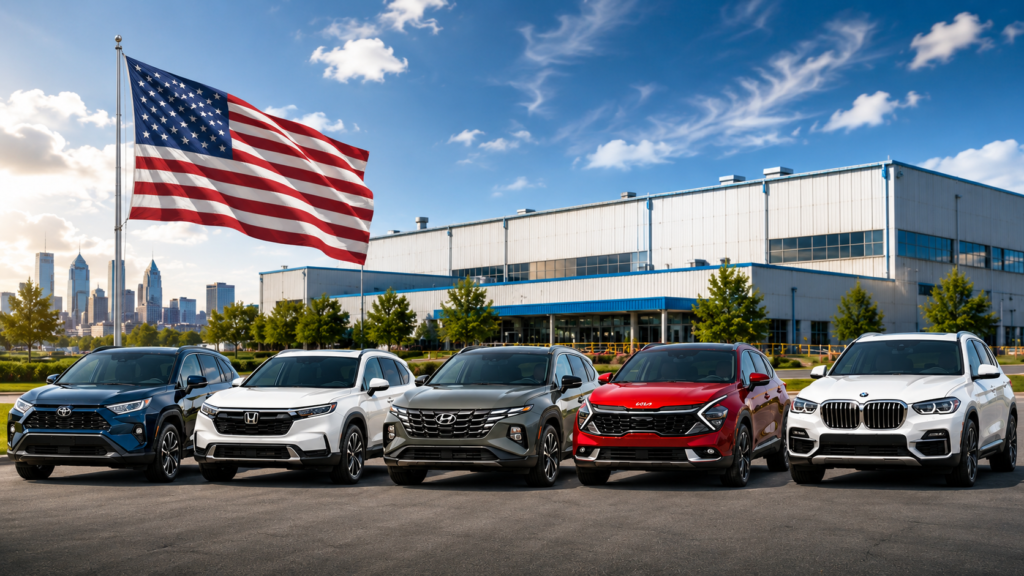
The Meaning of “American-Made” Has Changed
For years, many buyers judged a vehicle by the logo on its grille.
But today’s automotive industry doesn’t work that way.
Modern vehicles are built through global supply chains. A truck designed in Michigan might use engines assembled in Mexico, electronics from Asia, and transmissions from Canada. Meanwhile, a Japanese or Korean automaker may build an SUV almost entirely inside the United States using American workers and thousands of locally sourced components.
That’s why manufacturing experts now look beyond the badge.
What the American-Made Index Actually Measures
The annual American-Made Index evaluates vehicles using several important factors, including:
- Final assembly location
- Percentage of U.S. and Canadian parts
- Origin of major components such as engines and transmissions
- Manufacturing workforce
- Domestic production footprint
Rather than asking who owns the company, the rankings ask a more practical question:
How much of this vehicle is actually made in America?
That distinction changes everything.
Foreign Brands Have Been Investing in America for Decades
Many overseas automakers began building U.S. factories decades ago.
Today they operate massive manufacturing plants across states including:
- Kentucky
- Alabama
- Tennessee
- Texas
- Indiana
- Ohio
- Mississippi
- South Carolina
These facilities employ tens of thousands of American workers while supporting hundreds of local suppliers, logistics companies, steel producers, and technology businesses.
For many communities, these factories have become major economic engines.
Why American Workers Build So Many “Foreign” Cars
Automakers learned long ago that producing vehicles close to customers offers several advantages.
Building in America helps companies:
- Reduce shipping costs
- Avoid import tariffs
- Speed up deliveries
- Improve supply-chain reliability
- Respond faster to customer demand
- Create vehicles specifically designed for American drivers
Instead of importing every vehicle across the Pacific or Atlantic, manufacturers increasingly build them where they’re sold.
The result is that millions of vehicles wearing foreign badges are assembled by American workers every year.
Meanwhile, Some American Brands Build Vehicles Overseas
The opposite is also true.
Several vehicles sold under American brands are assembled outside the United States.
Manufacturers often choose international factories because of:
- Lower production costs
- Existing manufacturing capacity
- Specialized production facilities
- Global platform sharing
That means a familiar American logo doesn’t automatically guarantee American manufacturing.
Why This Matters to Car Buyers
If your goal is to support U.S. jobs, buying a domestic brand isn’t always the full story.
A vehicle assembled in Kentucky by thousands of American workers may contribute more to the U.S. economy than one carrying an American badge but assembled overseas.
That’s why experts increasingly encourage shoppers to research where a specific model is built instead of relying solely on brand heritage.
The Future of American Manufacturing
The rise of electric vehicles is making the conversation even more interesting.
Automakers are investing billions of dollars in:
- New battery factories
- Semiconductor production
- EV assembly plants
- Motor manufacturing
- Advanced robotics
- Software development
Whether the badge says Ford, Toyota, Honda, Hyundai, BMW, or Mercedes-Benz, many of these investments are happening on American soil.
Competition is no longer simply “American vs. foreign.”
Instead, it’s about which companies are investing the most in American workers, factories, and long-term manufacturing.
Final Thoughts
The 2026 American-Made Index sends a clear message: in today’s global auto industry, nationality isn’t determined by the logo on the hood.
It’s determined by where vehicles are engineered, assembled, and supported by thousands of hardworking Americans.
For buyers who want to support domestic manufacturing, the smartest question may no longer be, “Who owns the company?”
Instead, ask:
“Where was this vehicle actually built?”
That answer may surprise you—and it could completely change the way you shop for your next car.